How it works

Your brain learns from feedback.

We measure your starting point. Build training around your individual brain. Give the brain real-time feedback. Then measure how the baseline changes.

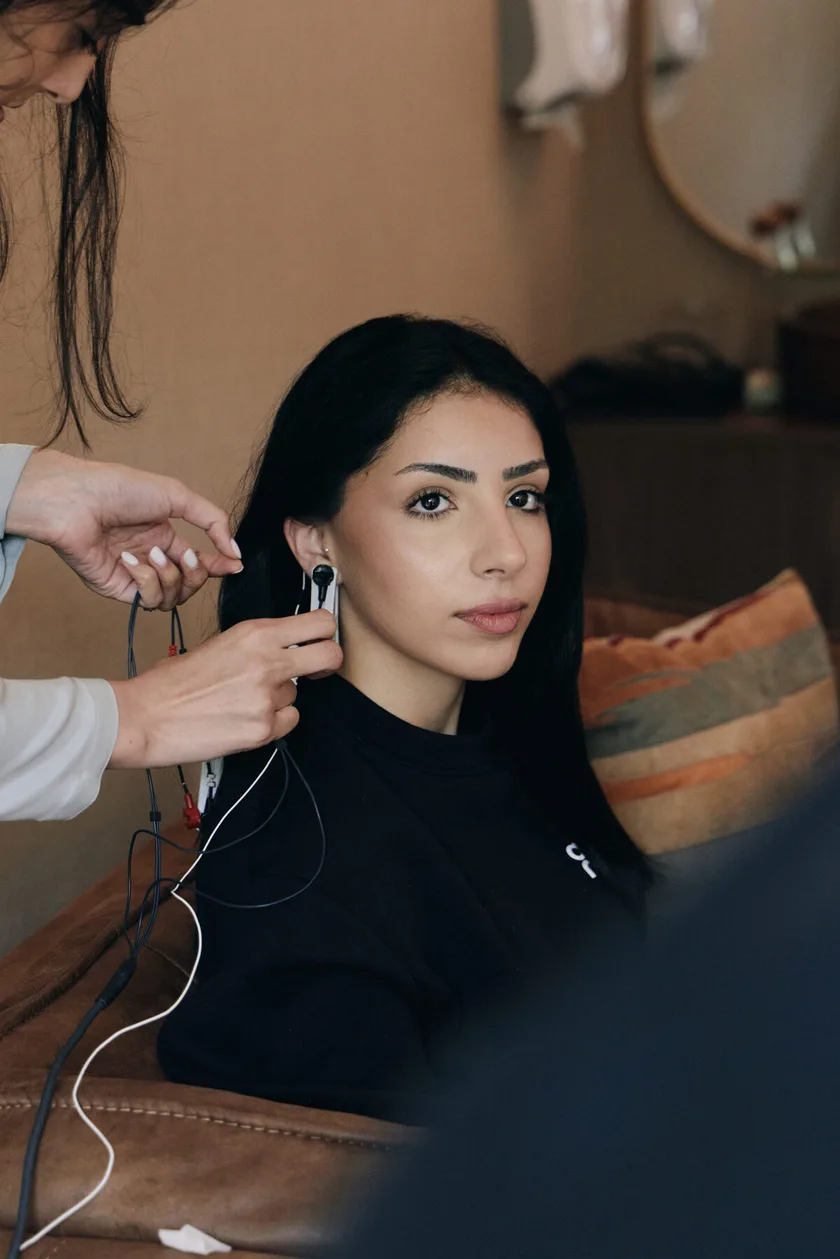
Sensors being placed beside a client's ear before a session
Map. Train. Measure.

YOUR BRAIN LEARNS.

What if feeling better starts with training differently?

Your brain is constantly adapting to what you experience.

  • Stress.
  • Sleep.
  • Learning.
  • Pressure.
  • Habits.
  • Performance.

This ability to adapt is called neuroplasticity.

Neurofeedback works with that natural ability by giving your brain real-time information about its own activity.

Over repeated training, the brain gets an opportunity to practise more useful patterns of regulation.

Think of it as:

Feedback-based training for your brain.

You don't have to consciously change your brainwaves. Your brain learns from the feedback.


THE SYSTEM BEHIND HOW YOU FEEL AND PERFORM

A well-regulated brain isn't calm all the time.

MindTune helps the brain practise moving between these states more efficiently.

Not permanent calm. Better adaptability.

When regulation is working

  • It knows when to switch on.
  • When to focus.
  • When to respond.
  • And when the pressure passes, how to switch off and recover.

That flexibility is part of healthy central nervous system regulation.

When it becomes less efficient

  • Focus becomes harder to hold.
  • Stress stays with you.
  • Sleep becomes less restorative.
  • Emotions become harder to regulate.
  • Mental energy becomes less consistent.

When regulation becomes less efficient, everyday life can start requiring more effort.

A record that grows with you

Every Map, Tracked Over Time

Every Brain Map becomes part of your MindTune record, allowing future assessments to be compared with your previous baselines so you can see how your brain changes over time, not just from one session to the next.

01

Map.

Understand your starting point

We start with you.

Before looking at a screen or brain map, we want to understand:

  • What brought you here?
  • What would you like to change?
  • What have you noticed?
  • What would feeling better actually look like?

Because brain data only becomes useful when it is connected to the person.

Map your baseline.

Small safe sensors placed on the scalp record electrical activity naturally generated by the brain. This is called QEEG brain mapping. Nothing is injected. Nothing enters the body. Nothing is electrically stimulated.

The recording gives our team another perspective on how your brain is currently functioning.

Our team interprets your brainwave patterns and turns them into a Personalized Brain Performance Report

Understand what the data means for you.

Our team reviews the brain map alongside your cognitive assessment, goals and experiences. We explain the findings in simple language. The objective is to help you understand yourself—or your child—better.

It is not just a map. It is a story of how your brain is working — and what to do next.

02

Train.

A plan built around your brain

Build your personal training plan.

Our team develops a neurofeedback training plan based on your individual findings.

Train through real-time feedback.

During the half-hour session, you sit comfortably and watch visual content. Your brain activity is monitored in real time. When activity moves toward the training target, the visual experience responds positively.

When activity moves away, the feedback changes. Your brain notices, and learns - that is neuroplasticity in action.

03

Measure.

Review progress. Decide what’s next.

Re-map.

After a structured training period, a second brain map can give us a new baseline.

Every Brain Map becomes part of your MindTune record. Future assessments can be compared with your previous baselines so you can see change over the long term, not just session to session.

Measure what matters.

We compare objective information with what has changed in everyday life.

  • Better sleep?
  • More stable attention?
  • More calm under pressure?
  • Less mental effort?
  • More consistency?

Then we decide together what comes next.

What happens after your program?

We don’t automatically sell you another package.

At the end of a structured training cycle, we review how you feel, compare your progress and, where appropriate, re-map your brain. From there, the recommendation may be:

  1. Continue training.
  2. Move into lighter maintenance.
  3. Return for a future Brain Performance check.
  4. Or simply get on with life.

What does neurofeedback actually feel like?

Surprisingly normal. You sit comfortably. Sensors are placed on your scalp. You watch. Your brain does the learning. There is no electrical stimulation from the EEG neurofeedback sensors and no painful procedure.

Many clients describe the experience as easy and relaxing.

Personalized support, every step of the way.

You leave your assessment with your Personalized Brain Performance Report as a PDF you keep. A member of our team checks in with you a few days later to see how you're doing.

Your MindTune journey includes communication, progress review and follow-up. If something changes, we want to know. If the training needs adjustment, we review it. If you have questions, you have a team to ask.

That continuity is a core part of the MindTune experience.

SERIOUS SCIENCE. DELIVERED SIMPLY.

The technology is advanced. Your experience shouldn't feel complicated.

MindTune uses professional medical grade QEEG and FDA-cleared technology, supported by decades of research into neurofeedback, learning and brain self-regulation.

Our programs are delivered through a qualified, PhD-led multidisciplinary team and MindTune operates through licensed and registered entities in the UAE.

The goal isn't to impress you with terminology.

It's to use the neuroscience responsibly and make it useful.

Start with understanding.